Thousands of years ago early humans were already using technology to hunt, gather and harvest crops. Since those very first spears and axes, technology has developed very far. Today we live in a world where information travels almost instantly across the Earth. We are in a place where people can travel faster than the speed of sound and where we keep discovering new things and new ways to improve.
New technology startups are being formed everyday and revolutionary technologies are being developed faster than ever before. Facebook recently bought the Oculus Rift virtual reality headset for two billion dollars after it had been a startup for only a short period of time. Google is building driverless cars which means that future generations may never need to learn to drive. Other companies like Tesla have developed electric sports cars that can go 270 miles in one charge.
Anyone can make a successful startup with a good idea and some hard work. Well, no you need to be very lucky. You need to be able to betray your close friends and lie straight to peoples faces. You need to be willing to do many things to get your idea out there. Whether it includes sleepless nights or not spending any time with your friends and family, that is all part of the pack. With more and more technological advances it has become increasingly difficult to succeed.

Showing posts with label philosophy. Show all posts
Showing posts with label philosophy. Show all posts

17.9.16
Why promises of presidential candidates never become reality
A look into the EEB2 student representative elections and what goes down once they have been elected.
22.11.15
Interview with Mr. Park

On Monday 19th October, Professor Jinwhan Park from the Gyeongsang National University South Korea came to eeb2. Mr. Park is the president of “Philosophy with Children and Youth Network” in Asia and the Pacific (PCYNAP), he came to our school to explain this philosophical and ethical idea and I had the pleasure of interviewing him.
When you think of philosophy, you think of the academic one, the one we study, also known as the study of nature and its causes, of the principles of reality, of knowledge and our values, all based on logical reasoning. Mr Park's intention is not to teach academic philosophy to children. What he wants to do is teach them more about practical philosophy. By doing that, he teaches children how to be able to make an ethical and logical judgement in a particular situation. "It is crucial that younger students learn how to make a good judgement because some of them might be the future leaders of democratic societies so the sooner they are able to do it the better", he says.
9.11.15
Anarchism

With the current theme being "Freedom" at the Woluwe Independent, I thought it would be interesting to take a look at one of the most misunderstood and unknown political beliefs in the history of the Universe: Anarchism.
Anarchism is a political philosophy that believes societies should be self governed, and that no rules should exist that could limit one's personal freedom. As it is put by Noam Chomsky, a notable linguistic and political philosopher and activist, Anarchism is a "tendency in human development that seeks to identify structures of authority that constrain human development" and then subject them to a challenge: to justify themselves, and demonstrate they are legitimate, or otherwise accept "dismantling and reconstruction".
15.6.15
The Role of the Observer, the Self and Detachment
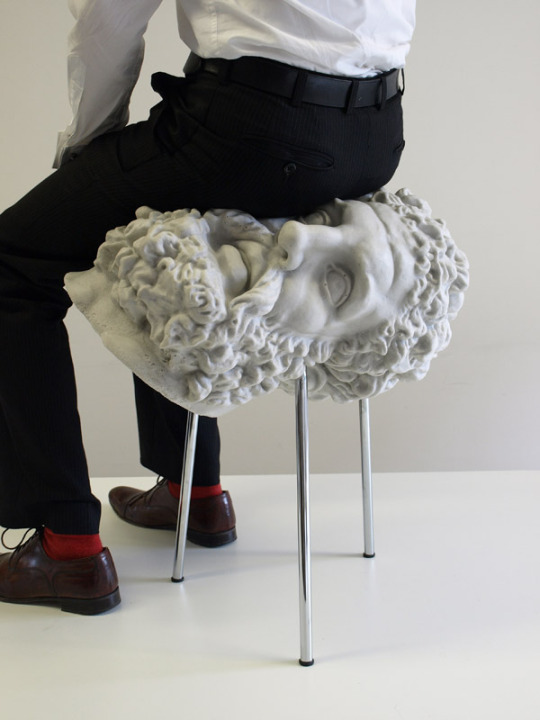
The
world exists as a thing in itself and as an appearance through the
senses of the observer. The world of appearances consists of things
as we know them by the ordinary means of sense experience and
scientific investigation, in other words the empirical world. For
Kant these experiences are the phenomena that make up the world. This
nature of duality in the world reveals our limitation of knowledge as
we can never know the world as it is in itself, but merely how it
could appear to us as scientists, philosophers or ordinary
perceivers. As Schopenhauer beautifully puts it- “The world is your
idea”.
19.5.15
Do the Failings of Education Systems in Developed Nations Mirror the Failings of Capitalism?
26.4.15
Why should we read?
In the light of the newspaper launch, we might sit back and ask ourselves as to why we should even waste part of our precious time reading. The outside world provides so much excitement and action, so why stay inside and pick up a book?
The answer is actually quite simple: contrary to popular belief, literature doesn’t close the door to the outside world; instead it opens many more than we’d normally not? have access to. Through books we can experience different cultures, societies and events that would, under normal circumstances, pass us by. Books make us understand the world better. For instance, the Renaissance itself is proof enough that printing is the key to spreading thoughts, opinions and information. Reading encourages critical thinking.
9.2.15
Why should we develop a critical mind?

In present day society,
there are numerous ways of thinking, which are cut off from us –
not because we’re incapable of them but because various blockages
have been developed and imposed to prevent people from thinking in
such ways. Being open-minded and having the capacity to see things
from more than one point of view is a virtue that people should be
encouraged to strengthen from an early age and which can often be
found absent in parents and teachers – the people who are
responsible for our education. Thus we must take it upon ourselves to
not naively accept what is placed in front of us as the only option
and use reason and creativity as the tool to free us from the narrow
sphere of thought that is adopted by most people in the world right
now.
Subscribe to:
Posts (Atom)