

31.10.16

19.9.16
Tears raining in May

As morning turned into afternoon
and me spending in bed all day.
Wasn't expecting to see you very soon,
in fact you had just left in may.
With wounds still so very open,
and me everyday missing you.
My soul left on the ground broken
wishing to hear one more time: I love you too.
By Babette Stolk
By Babette Stolk
17.9.16
Why promises of presidential candidates never become reality
A look into the EEB2 student representative elections and what goes down once they have been elected.
14.9.16
Interview with Austėja Linartaitė, President 2016-2017

On Tuesday this week, the students of EEB2 were faced with choosing their president for the coming school year. Both candidates made compelling speeches expressing their motivation and goals for the upcoming year. With a small difference of 14 votes, the students elected Austeja their president for this year. What happens now? We asked when we talked with Austėja about her plans for the coming year.
24.4.16
IV.
Died has the smouldering fire of day,
Its embers still glow in the westerly sky,
Soon they’ll give way to the darkness of night.
A slow-moving shade creeps from the cold east,
Hiding the world with its black starry cloak,
Everywhere under the bright colours fade,
Thicker grow shadows in corners and cracks.
Just as a sickness creeps over a man,
Paling the face and stealing its redness,
Surrounding the eyes with ill boding black,
Seeping the life from a body once strong.
Quiet’s the world with slow idle sleep,
Its creatures depart for the dreamy realm,
The woods and the fields and the high mountain peaks,
Lonely they listen to Silence’s song.
A frost bringing wind just howls in the dark,
Its voice undisturbed by bustling day,
Calm’s all around in this shadowy waste,
Peaceful and quiet is starry-eyed Night.
The Dionysian
20.4.16
Interview de M. Spronck, Conseiller S7

Présentation : Je m'appelle Christian Spronck, je suis
marié et j'ai deux merveilleuses jeunes jumelles (quatorze ans).
J'ai été gradué non-licencié en professeur de maths et physique.
J'habite à Liège, sous Magne, et là c'est ma troisième année à
EEB2.
Donc ce n'était pas votre premier choix d'être conseiller ?
Ouhla non, c'est une longue histoire d'ailleurs.... quand j'avais seize
ans je me formais pour être pilote de chasse à l'école Cadet de
l'Air, dans la Force Aérienne ; en même temps que je faisais
ma secondaire, jusqu'à mes dix-huit ans. Et donc j'ai obtenu mon
brevet de planeur (glider). Au final j'ai arrêté parce que je
n'aimais pas la mentalité de l'Armée. Ensuite,
j'ai fait un an de maths à l'université mais j'ai aussi arrêté
parce que l'ambiance ne m'allait pas. Par contre, j'ai fait un
régendat, ou graduat en maths, ce qui m'a plus plu parce qu'il y
avait plus de contact. Je suis sorti en 1993 pour devenir éducateur
(conseiller) pendant quatre, cinq ans un peu partout, surtout dans un
internat à Liège. Ce qui m'y a intéressé c'était de comprendre
les problèmes des adolescents pour pouvoir les aider.
Comment êtes-vous donc arrivé ici ?
Je suis plus tard retourné en école secondaire comme professeur de
maths, d'ailleurs dans la même école que Mme Mirolo – j'ai eu son
fils comme élève ! Mais après treize ans à cette école et
au total vingt-huit ans du même genre de boîte, j'ai voulu partir,
et c'est ainsi que j'ai postulé à EEB2.
Et vous voilà.
Et me voilà. J'ai aussi enseigné dans une prison.
Merci beaucoup pour cette petite récapitulation... Parlez-nous
maintenant de votre journée typique.
Je commence tout d'abord avec un grand sourire [rires]. Une fois
arrivé à l'école, je surveille les absences et les retards.
Ce n'est pas trop frustrant ?
Non, ça va. [ça ne va clairement pas] J'écoute aussi les élèves
en difficulté, puisque en plus du travail d'administration je me
prend aussi en charge des étudiants. C'est un travail important.
Dernièrement, je me charge aussi de l'organisation du Bac – ça
demande beaucoup de travail, c'est sûr. Ça fait deux ans que je
suis en charge de ça.
20.4.16
Interview with Mr Spronck, S7 conseiller

Presentation: My name is Christian Spronck, I'm married and I have two wonderful young twin daughters (14 years old). I graduated unlicensed as a teacher in maths and physics. I live in Liège, below Magne, and this is my third year at EEB2.
So being an educator wasn't your first choice?
Oh no, it's actually a long
story... When I was sixteen I wanted to become a fighter
pilot at the school Cadet de l'Air, at the Air Force; and at the
same time I was completing my high school education, I was
eighteen at the time. Eventually, I got my glider certificate! In the end I stopped
because I didn't like the mentality of the Army. [piercing stare]
Later, I did a year of maths at university but left because the
atmosphere didn't suit me. However, I completed a teaching graduate
in maths, which I liked more because there was more social
interaction. I finished school in 1993 to become an educator for four or
five years all over, I spent most of that time in a boarding school in Liège.
What got me interested in being a teacher was understanding the problems that
adolescents go through and trying to help them out.
How did you get here?
I later went back to high school as maths teacher, at the
same school as Mrs Mirolo – I had her son as a student!-, but after
thirteen years in that school and in total twenty-eight in the same
kind of establishments, I decided I wanted to leave, and that's when I
applied to EEB2.
And here you are.
And here I am. Oh, I also worked as a teacher in a prison.
Thanks a lot for this recap... Tell us about your typical day.
I first begin with a big smile [laughs]. Once I'm at school, I check
the absences and lateness.
It's not too frustrating?
No, it's OK. [It clearly isn't] I also listen to students who are in
trouble, since on top of the administration work, I'm also in charge
of the students. It's an important job. Finally, I'm also in charge
of the organisation for the bac – it demands a lot of work, that's
for sure. I've been working on it for two years now.
What do you dislike about the European school?
No student coming out of high school is ready, they just don't know
what they want to do. The level of certainty is simply way too low,
and pursuing your studies or whatever comes after becomes difficult.
I also find myself puzzled by certain things that happen in the
school, or wrong ideas that can spread around very quickly. Then
again, no school is perfect.
23.2.16
EEB2 Debate Club Invite Michael Gahler To Debate About Europe
EEB2 challenged Michael Gahler, Member of the European Parliament (MEP), to join a club debate on the future of Europe.
The proposition team put forward the motion that the EU is doomed to failure. Michael Gahler accepted the challenge to oppose this motion and the event took place on Tuesday 16th February in Salle Polyvolante.

EEB2 students prepared well for the debate and impressive arguments were made on both sides.


Over 500 people attended – all our S3 and S4 students. Thank you for the support!

Well done to:
Ligaya
Alessia
Amy
Christina
Sofia
Gustavs
Emma

By Colm Kehoe
Edited by Gustavs Zilgalvis
20.1.16
Mock United Nations (M.U.N.) and EEB2's Future Team

On Friday 15 January, a group of EEB2 students braved the cold and snowy conditions to take a train to Wavre and walk two kilometres into the Belgian countryside to visit the international school of Le Verseau. The purpose of this excursion was to attend an M.U.N. training conference and discover what M.U.N. is all about.
The group experienced an impressive simulation of the workings of the United Nations and received a lesson in United Nations vocabulary, diplomatic conventions and international relations. It was clear that the students at Le Verseau had gained immensely from the research work involved, the public speaking experience, the debating and the critical thinking – all of this while gaining huge experience of working together as a team.
12.1.16

6.1.16
Footfest 2016 Logo!
We are excited to be the first to bring you the 2016 Footfest logo! The winner of the logo competition is Arthur Cherry, an S7 student from the French section. This logo was chosen by the general coordinators among 20 other drawings submitted.

The logo will be printed on T-shirts for Footfest coordinators, crew and security.
Colors of the year? First suggestions are black for security, burgundy for crew and bright blue for coordinators, but this is not a final decision yet.
Are you excited for Footfest 2016? We definitely are!
Let us know what you think of the logo and what you are excited about for this year's Footfest.
Credits for digitizing it go to Evelina Anglickaite.

The logo will be printed on T-shirts for Footfest coordinators, crew and security.
Colors of the year? First suggestions are black for security, burgundy for crew and bright blue for coordinators, but this is not a final decision yet.
Are you excited for Footfest 2016? We definitely are!
Let us know what you think of the logo and what you are excited about for this year's Footfest.
by Sofia Brusa
Edited by Emilie Kerstens
20.12.15
Cupcakes
Cupcakes are delicious if you make them with the right recipe. One of the greatest internet cupcake/cake bakers is Elise Strachen, who created her own YouTube channel, mycupcakeaddiction. On this channel, you can find great recipes for all kinds of cakes and everything cake related. One of the greatest things about Mrs. Strachen, is that she uses baking powder rather than baking soda. Baking soda is difficult to find in groceries stores in Europe, you have to go to the pharmacy to find it (not joking). She has also created a lot of videos to show how to make beautiful piping frosting decoration, that are not very time consuming to make. I tried two of her easy recipes. The outcome was delicious which surprised me because every time I've made cupcakes in the past they have always had a weird outcome. Most of the time the texture of the cupcakes were not very appetising and they didn’t taste great, this time they turned out great.
My cupcakes
30.11.15
Where would you rather be ill?
Why are the countries which achieve a high ranking in the World Health Organisation's (WHO) scale of performance in healthcare mainly found in Europe?
Healthcare services differ substantially around the globe and looking at the WHO reviews present quite a few surprises. For instance, Italy, ranked second best, has one of the most comprehensive and efficient healthcare systems on the planet. Russia, on the other hand, falls short of the performance results achieved in Pakistan, Albania and Bangladesh which have a far less developed economies.
28.11.15
II.
Little by
little the darkness recedes,
Giving its
way to the dawn’s early light,
Rising the
song of the birds in the trees,
Making again
the world coloured and bright.
Awoken are
beasts from their night’s slumber,
Arisen are
men to work through the day.
And anew
bustles all the world under,
Touched and
adorned by the sun’s golden rays.
See now the
monk upon the high hills,
Singing the
song which for ages was sung.
And on his
aged words the world round him stills,
Heard is his
prayer to life-giver sun.
by the
Dionysian
24.11.15
"Brussels is a graveyard of living beings"
Belgium shut down all schools on the 23rd of November. The decision was made by our Prime Minister, Charles Michel. I was happy about it at first because it meant I didn't have to finish my math homework, but then, I realised it wasn't right at all.
The numerous measures taken over the past few days have made fear grow in our hearts. We often hear Charles Michel saying that the threat is "imminent". The threat of what, terrorism? The fact is that we have no idea of what is going on in this country. Belgian police authorities say it’s for our own safety that we don’t know anything yet, but is it really if we are too scared to leave our house?
The terrorists attacked Paris, aiming to destroy our culture and our way of life. They haven't attacked Brussels yet but we are doing the job for them anyway: we are destroying our lifestyle right now by shutting everything down.
The problem is that the government is doing this because they don’t know what else to do. Yesterday on the Belgian talk show "C'est pas tous les jours dimanche", the president and spokesman of the Free Union of the Public and Police Function, Vincent Gilles, admitted that they don’t know what the security level 4/4 means. This is because the government created the different levels of security without saying which necessary measures had to be taken, and where.
I agree with the fact that we are “better safe than sorry”, but only to certain extent; we shouldn't just be safe, we should also feel safe and yet all these measures to the continuous “imminent threat” just make us feel scared.
I agree with the fact that we are “better safe than sorry”, but only to certain extent; we shouldn't just be safe, we should also feel safe and yet all these measures to the continuous “imminent threat” just make us feel scared.
by Sarah Mignot
22.11.15
Interview with Mr. Park

On Monday 19th October, Professor Jinwhan Park from the Gyeongsang National University South Korea came to eeb2. Mr. Park is the president of “Philosophy with Children and Youth Network” in Asia and the Pacific (PCYNAP), he came to our school to explain this philosophical and ethical idea and I had the pleasure of interviewing him.
When you think of philosophy, you think of the academic one, the one we study, also known as the study of nature and its causes, of the principles of reality, of knowledge and our values, all based on logical reasoning. Mr Park's intention is not to teach academic philosophy to children. What he wants to do is teach them more about practical philosophy. By doing that, he teaches children how to be able to make an ethical and logical judgement in a particular situation. "It is crucial that younger students learn how to make a good judgement because some of them might be the future leaders of democratic societies so the sooner they are able to do it the better", he says.
19.11.15
I.
There
is no sin in killing,
So
the poet Virgil sang,
The
only crime in slaying,
Is
to kill a guiltless man.
When
battle shouts are ringing,
And
death the warrior sows,
The
victim’s life is fleeing,
But
the sower’s glory grows.
The
vengeful spirit’s storming,
When
offenders meet the blade,
And
then the storms are stilling,
For
justice has been made.
There
is no sin in killing,
So
this poet Virgil sang,
The
only crime in slaying,
Is
to kill a guiltless man.
by the Dionysian
14.11.15
Humans but No Humanity

At least 120 people dead, 352 wounded, 99 of them severely. Six attacks shook Paris
last night on Friday, 13th November.
17 people killed by a
suicide bomber in Baghdad, Irak, on Friday at a memorial service for
a militia fighter killed in batttle against the ISIS.
Suicide bombings in
southern Beirut, Lebanon on Thursday 12th, kiling 43
people and at least 239 wounded victims.
What do all of these attacks have in common? They were all sanctioned by ISIS.
Close-mindedness and intolerance are our biggest enemies these days. ISIS is chasing after innocent people for the belief that they are right and have for “mission” to kill anyone who does not follow their radical ideals, forcing thousands of people to seek refuge in other countries and causing nations to live in fear.
12.11.15
A bed of Autumn leaves
I get scared when I lay down in bed,
When all my thoughts run through my head,
That is the time when they aren't confined,
When I am a slave of my own mind.
9.11.15
Anarchism
With the current theme being "Freedom" at the Woluwe Independent, I thought it would be interesting to take a look at one of the most misunderstood and unknown political beliefs in the history of the Universe: Anarchism.
Anarchism is a political philosophy that believes societies should be self governed, and that no rules should exist that could limit one's personal freedom. As it is put by Noam Chomsky, a notable linguistic and political philosopher and activist, Anarchism is a "tendency in human development that seeks to identify structures of authority that constrain human development" and then subject them to a challenge: to justify themselves, and demonstrate they are legitimate, or otherwise accept "dismantling and reconstruction".
7.11.15

4.11.15
The Economic Freedom of Today - (and the henceforth lack of one)
On March 9th 1776, Adam Smith officially published his Inquiry into the Wealth of Nations, or The Wealth of Nations for short. In this work, he examined how a nation’s wealth increased, decreased and behaved according to various social and political events and decisions. It is then that he first defined the term invisible hand from an economic point of view. Along with it he introduced the notion of a free market and supported the idea of having a free market. Almost 250 years on, does this notion of free market apply in today’s world?


2.11.15
The Maori Dynasty

Many people know of the British royalty, the Japanese royalty or the Belgian royalty. However, not many people know that the Maori, living in New Zealand, have their own royalty too, despite having been a British colony! It is time for their history and lineage to be revealed!
First of all, who are the Maori? The Maori are the indigenous polynesian people of New Zealand. They were the first settlers on these islands, after having gotten there by the means of canoes from the polynesian islands. They lived there in isolation for more than seven hundred years, during which their culture and social customs, the basics coming from the polynesian customs, flourished.
They created tribes, a horticulture and later also a strong warrior culture.
The European colonists, mostly of Great Britain, started arriving on New Zealand in the 17th century; An arrival that changed the way of life of the Maori drastically. The Maori tribes, also called “iwi”, started to adopt many aspects of European society and culture.
30.10.15
Tender chocolate cake recipe (8 people)
This is an Italian recipe passed on to me by my aunt. I hope you like it!
DISCLAIMER: This is not a recipe suitable for vegans or people with allergies to cow milk and/or eggs!
DISCLAIMER: This is not a recipe suitable for vegans or people with allergies to cow milk and/or eggs!
General
information:
Preparation: 20 minutes
Cooking: 25-30 minutes
Ingredients:
100g of butter
3 big spoons of milk
3 big spoons of milk
150g of sugar
200g of dark chocolate
A
pinch of salt
60g of flour
3
eggs
24.10.15
Interview with 2016 Fashion Show Designers

Each year after a great day of Footfest, we look forward to seeing the talent of our students showcased in the fashion show. Several designers work all year long to make their collections “runway ready”. This past weekend, the model auditions took place. Students walked in front of the designers in hopes of being selected to be a model for their collections. We talked with Jenni Karhunen, Martina Murasso and Alessia Tosetti to find out more about it. We look forward to seeing their collections at this year's Footfest.
21.10.15
The Super Blood Moon
In the night
between the 27th and the 28th, the moon was eclipsed by the Earth.
An
eclipse happens when a celestial body obscures another one, making it
completely or partially shaded; in this case, the Earth and the moon
were the two bodies concerned.
The
rare and strange thing about this eclipse was that the moon was not
eclipsed the way it usually is. During this eclipse, the moon was at
the nearest place that it could have been to the Earth, so the
details we could see were incredible.
However,
this time it also appeared red to the terrestrials, which is why it
was called “blood moon” - this term having been used for as long
as eclipses have been recorded.
6.10.15
Why We Should Help The Refugees

Since the beginning of
the Syrian Civil War, in 2011, four million people have left
the country, looking for better conditions of life elsewhere. To this
day, countries like Turkey and Lebanon, which are geographically
located near the war-torn country, have received and helped the great
majority of the refugees. But now they are coming to Europe, and it
is time for us to make an important decision, that will change
Europe, and very likely the world.
19.7.15
In defence of the European Schools - An open letter in response to POLITICO
Last
week,
the European edition of POLITICO published
an
article about the European Schools. The Euroschools rarely attract
any press
coverage and the internet has remained generally free of
journalists caring about our system until now. Once their article
appeared on the front page of their website, thousands of students
and parents instantly read their critique of the European Schools.
The
article was clearly a hit. After four days it remained the second
most read article on the POLITICO
website,
receiving even more views than the coverage of the Greek crisis. It
painted a misleading picture of a crumbling education system that
alienated most of its students through bureaucracy, and ignoring
nationality in a school system resembling a Kafkaesque nightmare.
Contact with students as well as graduates and parents upheld our
view that the article was misguided and prioritized controversy over
fact.
In fact, after talking to one of the students who was quoted in the
article, it surfaced that her positive outlook of the schools had
been overshadowed by cherry-picked criticisms.
30.6.15
Top 3 TV Shows to binge-watch during the summer
Warning! All these shows are rated +16 and deal with mature themes, please keep that in mind if you decide to watch them.

You might have noticed advertisements for this show in the digital panels in the metro: this is because Orange Is The New Black just released its third season on Netflix in June. The summer break would be a great opportunity to catch up on this wonderful show (personally, it's my favourite show ever), or even start from the beginning.
15.6.15
The Role of the Observer, the Self and Detachment
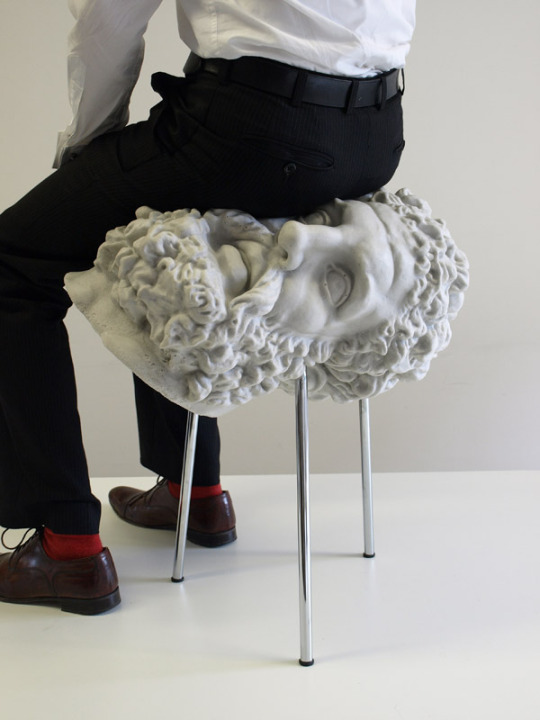
The
world exists as a thing in itself and as an appearance through the
senses of the observer. The world of appearances consists of things
as we know them by the ordinary means of sense experience and
scientific investigation, in other words the empirical world. For
Kant these experiences are the phenomena that make up the world. This
nature of duality in the world reveals our limitation of knowledge as
we can never know the world as it is in itself, but merely how it
could appear to us as scientists, philosophers or ordinary
perceivers. As Schopenhauer beautifully puts it- “The world is your
idea”.
21.5.15
The Jerusalem Syndrome – When everyone thinks they're holy

Last month, as we all
know, was Easter, a Christian celebration marking the death and
resurrection of Jesus Christ. For such a celebration it is very
popular amongst many people, regardless of their religion, to spend
their Easter holidays at the place where it is said it all happened:
Jerusalem.
In big groups people
arrive and wander around the city, taking pictures, admiring the
Temple Mount (called “Haram Al-Sharif), the Western Wall or simply
let the interestingly holy feeling of the city wash over them.
It happens though, that
the peaceful visit in Jerusalem takes a completely unexpected and
surely entirely unwanted turn. It seems that the whole “holiness”
of the city can suddenly turn someone from completely normal to a bed
sheet-wearing self-proclaimed saint who has made it their mission to
preach loudly in the streets of Jerusalem. A rather mortifying
experience for all involved.
19.5.15
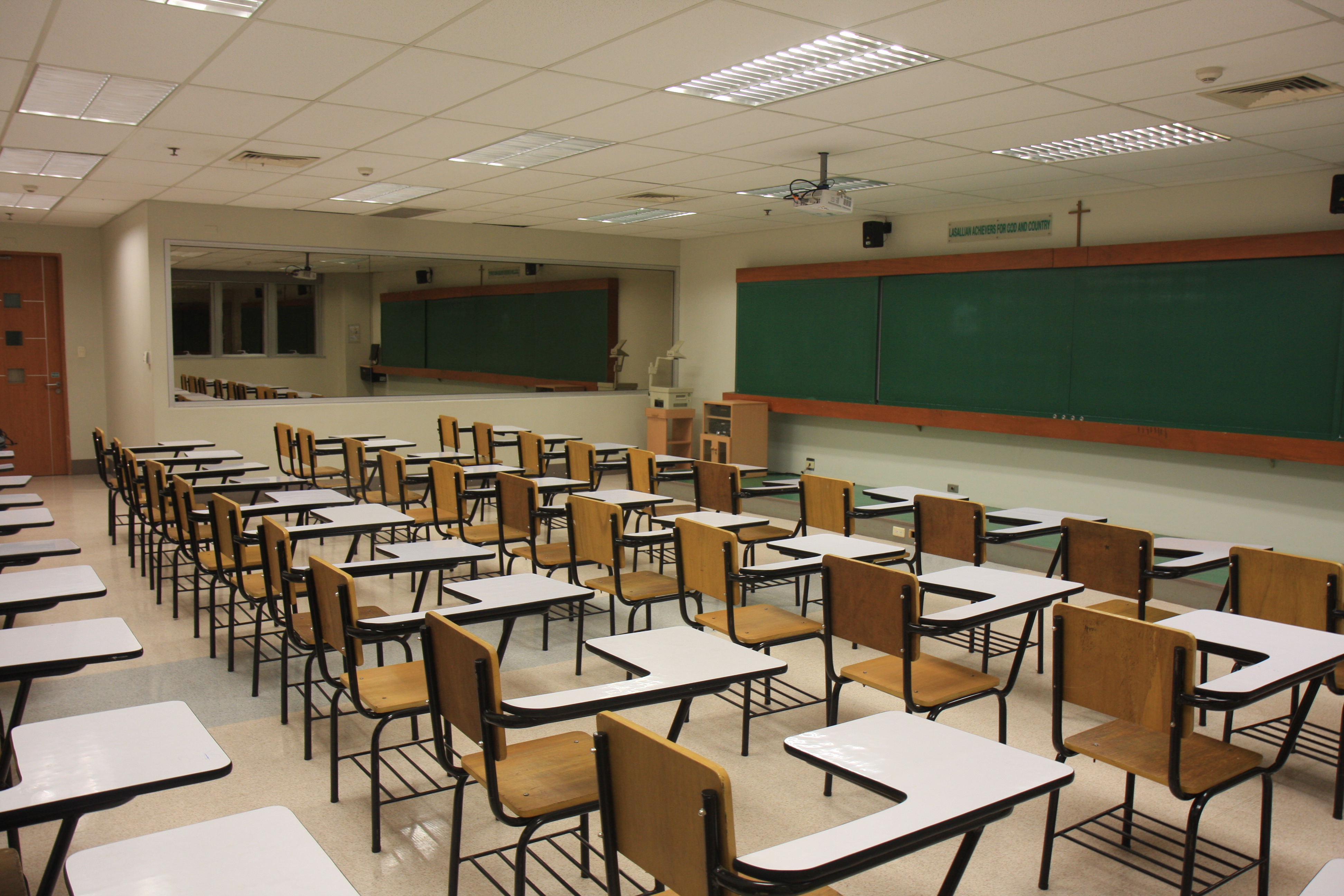
Do the Failings of Education Systems in Developed Nations Mirror the Failings of Capitalism?
17.5.15
Interview with Professor Christopher Brummer of Georgetown University
‘To get to where you want in life, you always have to go through a period of hard work.’


Only 36 and already highly successful. I interviewed Christopher Brummer, law professor at the prestigious Georgetown University in Washington D.C. He started his career at a young age in Germany, and has traveled the world since. He is a great fan of Star Wars and has built quite a collection. I spoke with him over skype, and asked him more about his fascinating life.
13.5.15


30.4.15
Mini sausage rolls
Mini sausage rolls
Ingredients:
- Mini sausages (or just cut normal sized ones)
- Puff pastry (1 pack out of the fridge)
- Mustard or ketchup (optional)
- 1 egg yolk
28.4.15
The Debating club
We all know: "The importance of learning public speaking for young people today - that students who develop public speaking skills have a skill for life” (Mrs. Andries). This is why our school decided to start a Debating Club. The idea came from an article published in 'The Washington Post’ which explained that debating is needed for educational progress, for work and for full participation in democracy.
Our school was really amazed about the enormous response from the pupils. After so many applications the debate started thanks to Mr. Kehoe who has organized it with the help of other teachers. It was a program held during ten weeks (every Tuesday from January 20th to March 24th) at lunch time in the Prefabs. During this period all 72 students of years 4,5 and 6 who applied could participate in the debate. Furthermore everyone in the school who wanted to could go and watch it.
27.4.15
A simple winter's tale

About a distant land
Where lived a boy, hair white as snow
His name was Merriland.
The town he lived in was a bore
The train passed only twice;
The people there were very old
And didn't seem so nice.
Their eyes were green as emerald
They shined so bright at night;
Though many of them were just bald
No one had hair so bright.
Poor little boy named Merriland
He saw them stare and stare,
He bought a hat from a small band
The price of a train's fare.
He blended in without a sweat
He had turned into glass
And on the streets, brunette, brunette
"I think, produced in mass!"
26.4.15
Why should we read?
In the light of the newspaper launch, we might sit back and ask ourselves as to why we should even waste part of our precious time reading. The outside world provides so much excitement and action, so why stay inside and pick up a book?
The answer is actually quite simple: contrary to popular belief, literature doesn’t close the door to the outside world; instead it opens many more than we’d normally not? have access to. Through books we can experience different cultures, societies and events that would, under normal circumstances, pass us by. Books make us understand the world better. For instance, the Renaissance itself is proof enough that printing is the key to spreading thoughts, opinions and information. Reading encourages critical thinking.
26.4.15
Pizza and the formula of the universe
My Daddy taught me that the universe has been expanding for a long time now; apparently it has been doing so ever since the Big Bang. Even Einstein said that, so it must be true. This means that before I eat a pizza I should at least wait 10 minutes before I start, because during that time my pizza is going to expand and then the volume of my meal will have increased whereas the calories won't. Additionally, since my stomach will also have expanded, it won't even trouble me to eat an even bigger volume of pizza.
10.3.15
Tree of Life
Hello everyone !
I am Lexa, a sixth year student from the French section, and I want to present a painting I have recently done. It represents a tree inspired by the ancient Tree of Life, from the Scandinavian mythology, and it was done with acrylics on a cotton canvas in approximately five hours. This is the fourth painting I have ever done on a canvas, and I am pretty proud of it, despite some mistakes I think I could have avoided.
.jpg)
What was my inspiration for this work ? This 1958 documentary film gave me the idea.
What was my inspiration for this work ? This 1958 documentary film gave me the idea.
Subscribe to:
Posts (Atom)